Children and Trauma: what to expect and what to do
by Aletha Solter, Ph.D.
Click here for a two-page printable version for free distribution to parents.

Aletha Solter, PhD, is an internationally recognized expert on attachment and trauma. She wrote this article to help families in the aftermath of the terrorist attacks in the U.S. on September 11, 2001.
The advice would be the same for any major trauma. Even if your family has not been directly affected by trauma, simply hearing about frightening events or seeing them on TV can be sufficient to traumatize children.
What to expect
- Increase in separation anxiety, clinging, refusal to go to school or daycare, resistance to being alone in a room, especially at night.
- Increased crying and temper tantrums, often triggered by insignificant incidents.
- Increased fears and nightmares.
- Increased startle response, hyper-alertness, and hyperactivity.
- Regression in toileting, feeding, etc. Wanting to be treated like a baby.
- Spontaneous play with toys and themes relating to the trauma.
What to do
- Let your child stay close to you. Don't force him to play or sleep alone.
- If there has been a death in the family, let your child participate fully in the memorial service and grieving process, to the extent that she wishes.
- Don't force your child to act more grown up than he feels. It's okay to treat him like a baby if that is what he wants. This will give him strength to face the trauma and heal from it.
- Allow crying and temper tantrums. Try to accept these outbursts of intense emotions without punishing or distracting your child. These are natural stress-release mechanisms that help children heal from trauma.
- Encourage play and laughter about themes related to the trauma. Provide appropriate props (toy fire engine, ambulance, doctor kit, airplane, etc.). Join in the play if your child wishes, but let her take the lead. Play and laughter help children master overwhelming experiences and release anxiety.
- Give information in an age-appropriate manner. Answer your child's questions simply and truthfully, but shield him from distressing details. Like adults, children strive to understand why bad things happen. Explain this to the best of your ability, and make sure your child does not think that it was his fault.
- Offer reassurance. Explain what precautions are being taken to avoid another similar trauma from occurring.
- Try to maintain your child's daily routines and family traditions.
- Find help and support for yourself.
When to seek professional help
- If your child purposely injures himself or talks about wanting to die.
- If your child becomes destructive or violent.
- If your child becomes withdrawn or unresponsive.
- If your child has physical symptoms or loss of appetite.
- If your child's fears, nightmares, hyper-alertness, increased separation anxiety, regression, or other symptoms last more than a month.
- If your child cannot function normally for any other reason at home or at school.
About Aletha Solter
Aletha Solter, PhD, is a developmental psychologist, international speaker, consultant, and founder of the Aware Parenting Institute. Her books have been translated into many languages, and she is recognized internationally as an expert on attachment, trauma, and non-punitive discipline.
Aware Parenting is a philosophy of child-rearing that has the potential to change the world. Based on cutting-edge research and insights in child development, Aware Parenting questions most traditional assumptions about raising children, and proposes a new approach that can profoundly shift a parent's relationship with his or her child. Parents who follow this approach raise children who are bright, compassionate, competent, nonviolent, and drug free.
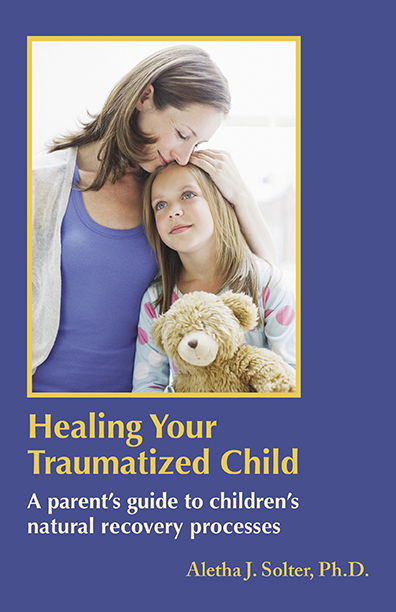
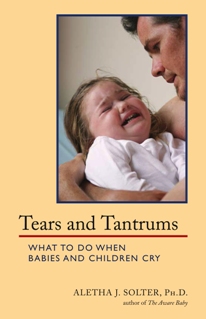
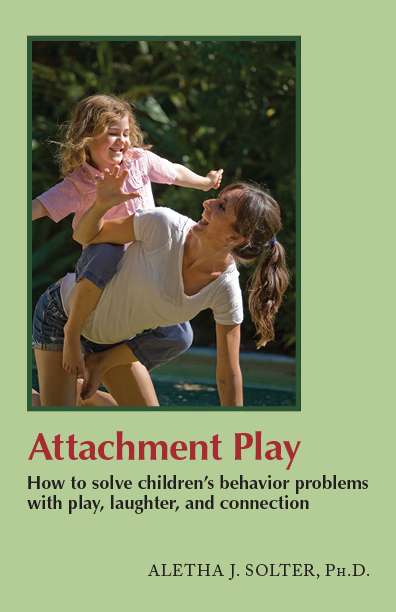
For more information about helping children cope with stress and heal from trauma, see Aletha Solter's books, Healing Your Traumatized Child, Tears and Tantrums, and Attachment Play.