Comparison between Aware Parenting and classical attachment parenting
by Aletha Solter, Ph.D.

Introduction
The purpose of this article is to clarify the meaning of attachment in Aware Parenting and to explain the differences between Aware Parenting and classical attachment parenting.
In the 1960s, John Bowlby was the first person to use the term "attachment" to refer to a baby's bond with its mother. He claimed that a strong emotional attachment to the mother was a sign of normal and healthy development. He studied factors that could interfere with healthy attachment, specifically long separations from the mother and the mother's inability to provide sensitive, responsive, and consistent care.
Bowlby's work inspired much research on attachment. To measure the strength and quality of a baby's attachment, researchers use a laboratory setting called the "strange situation" and observe a baby's behavior following the mother's brief departure and subsequent return. Researchers have developed behavioral criteria for secure attachment and identified several kinds of insecure attachment.
Longitudinal studies indicate that children who feel securely attached to their mothers at one year of age function better in all aspects of their lives than those who are not securely attached. The securely-attached children are more curious, confident, independent, socially competent, self-reliant, and empathic. They also have more friends than children who are not securely attached.
A secure attachment is now widely accepted as vital for healthy development, and studies have shown that sensitive and responsive care leads to secure attachment. However, there are differences of opinion about the specific parenting practices that lead to secure attachment.
In the 1980s, William and Martha Sears described a parenting approach that they called "attachment parenting." Inspired by parenting practices in indigenous cultures, they recommended breastfeeding, carrying babies in a sling, and co-sleeping. Their work gave rise to an attachment parenting movement. The term, "classical attachment parenting," was created by Marion Rose to refer to that original attachment parenting paradigm.
The Meaning of Attachment in Aware Parenting
The Aware Parenting approach was developed by Aletha Solter, a Swiss/American developmental psychologist and author of seven books for parents. Her first book, The Aware Baby, was first published in 1984 (revised in 2001). Her books have been translated into many languages.
Aware Parenting is a comprehensive, research-based approach to raising children from conception to adulthood. It includes attachment-style parenting, non-punitive discipline, and helping children recover from stress and trauma. (See The three aspects of Aware Parenting.) Specific practices define each of these three aspects.
In Aware Parenting, attachment-style parenting is defined as follows:
- Natural childbirth and early bonding
- Plenty of physical contact
- Prolonged breastfeeding
- Prompt responsiveness to crying
- Sensitive attunement
In Chapter 7 of The Aware Baby, the following additional specific parenting practices are recommended to help a baby become securely attached.
- Provide continuous care from the same people.
- Provide lots of physical closeness, including at night.
- Avoid separations of more than a day.
- During separations, be sure your baby is with a familiar, warm person.
- Fill your baby's needs promptly.
- Interact with your baby sensitively and lovingly.
- Never leave your baby to cry alone.
- Accept stress-release crying while holding your baby, empathizing, and listening.
- Never punish, hit, shake, or yell at your baby.
- If you are stressed, find support for yourself.
Many of these recommended practices are also characteristics of classical attachment parenting. However, the acceptance of stress-release crying is not typically practiced in classical attachment parenting. This difference in the interpretation of crying lies at the root of different practices in the two approaches, specifically for dealing with bedtime and behavior problems, as well as assumptions about the role of the mother. Each of these topics is discussed below.
The Interpretation of Crying
Aware Parenting and classical attachment parenting differ in their understanding and interpretation of crying. In classical attachment parenting, parents assume that all crying indicates an immediate need. The Aware Parenting approach does not make this assumption. Instead, it differentiates two functions of crying during infancy: 1) to communicate an immediate need, and 2) to release stress.
Because of these different interpretations of crying, the recommendations for responding to crying differ considerably between the two approaches. Proponents of classical attachment parenting do not recognize the beneficial stress-release function of crying. Instead, they are encouraged to calm or distract their babies who continue to cry after all immediate needs have been met. Breastfeeding and rocking are commonly recommended soothing methods.
In Aware Parenting, parents are encouraged to carefully interpret their babies' cues and meet all immediate needs before assuming that their babies need to release stress by crying. When babies continue to cry after all immediate needs are met, parents hold them in their arms while offering empathy and love. This is called the crying-in-arms approach. Aware Parenting recognizes that the communication function of crying is replaced by language after children learn to talk, but the stress-release function of crying continues during childhood and into adulthood.
This recognition of crying as an emotional healing mechanism leads to additional major differences in parenting practices between the two approaches. The practices described in the following two sections are directly related to the recognition of stress-release crying in Aware Parenting.
Dealing with Bedtime and Behavior Problems
Aware Parenting and classical attachment parenting differ in their understanding of children's sleep and behavior problems and their approach to discipline. Children whose stress-release crying is not understood or accepted often show signs of accumulated stress. For example, stress or unhealed trauma can cause sleep difficulties and behavior problems. Parents who practice classical attachment parenting may feel confused, discouraged, or exhausted when their toddlers continue to awaken every few hours during the night or begin to hit and bite other children in spite of the gentle, loving approach the parents have been using since their children's births. They sometimes explain their children's behavior by claiming that it's normal for babies to awaken at night for several years or that hitting and biting are normal toddler behaviors.
William Sears, who started the attachment parenting movement, was opposed to corporal punishment but recommended the use of time-out for toddler behavior problems. However, many proponents of classical attachment parenting prefer not to punish their children in any way. Some become overly permissive and self-sacrificing, often out of fear of frustrating their children and causing them to cry.
Aware Parenting is neither authoritarian nor permissive, and it avoids the use of rewards and punishments (including time-out). It helps parents understand the underlying causes of children's difficult behavior and offers loving ways to respond. Many parents are delighted to discover Aware Parenting after practicing classical attachment parenting. They learn how to avoid self-sacrifice as well as punishment and become the kind of parents they have always wanted to be. They often discover that their toddlers begin to sleep better and become less aggressive.
The Role of the Mother
The two approaches make different assumptions about the role of the mother. Bowlby's work focused on babies' attachment to the mother. He did not mention fathers because they were not commonly involved in child rearing during his time. Following his lead, the first attachment researchers studied only mothers. This original emphasis on mothers may explain why followers of classical attachment parenting claim that babies and toddlers should never be separated from their mothers.
More recent research on attachment includes fathers and other family members. We now know that babies can form secure attachments to more than one person and that multiple attachments are beneficial. Based on these more recent studies, the Aware Parenting approach recognizes the importance of both parents as well as other family members, and this assumption leads to practices that differ from classical attachment parenting.
Proponents of classical attachment parenting assume that only the mother can put the baby to bed (because of the recommended practice of breastfeeding babies to sleep). Proponents of Aware Parenting recognize that babies who are fussy and agitated at bedtime, after hunger and other needs are met, can benefit from crying in arms to fully relax and sleep peacefully. The understanding that breastfeeding is not an essential sleep aid implies that other familiar people can put the baby to bed without damaging the attachment relationship between mothers and babies. Other adults can fulfill many caretaking roles during the day as well. In Aware Parenting, the assumption is that babies need good quality attention and continuity in caretakers, but it doesn't always have to be the biological mother.
Neither approach recommends full-time daycare (group care) for babies during the first few years, but the reasons for this recommendation differ. Proponents of classical attachment parenting avoid daycare because of their belief that babies should not be separated from their mothers. Proponents of Aware Parenting understand that group care makes it difficult to meet babies' needs for individual attention. However, they recognize that mothers need help and that other people can provide good quality, individual care.
The definition of an ideal family differs in the two approaches. In classical attachment parenting, the (sometimes unspoken) assumption is that the best family is one with the two biological parents in which the mother stays home to raise the children. The Aware Parenting approach recognizes and respects all kinds of families and acknowledges that children can thrive in families with a single parent (male or female), adoptive parents, stepparents, or gay and lesbian parents.
In summary, the Aware Parenting approach recognizes the importance of secure attachment but differs in several ways from classical attachment parenting. The main difference is that classical attachment parenting assumes that crying during infancy always indicates an immediate need. Aware Parenting recognizes the stress-release function of crying in addition to its communication function. These different interpretations of crying lead to major differences in parenting practices between the two approaches.
About Aletha Solter
Aletha Solter, PhD, is a developmental psychologist, international speaker, consultant, and founder of the Aware Parenting Institute. Her books have been translated into many languages, and she is recognized internationally as an expert on attachment, trauma, and non-punitive discipline.
Aware Parenting is a philosophy of child-rearing that has the potential to change the world. Based on cutting-edge research and insights in child development, Aware Parenting questions most traditional assumptions about raising children, and proposes a new approach that can profoundly shift a parent's relationship with his or her child. Parents who follow this approach raise children who are bright, compassionate, competent, nonviolent, and drug free.
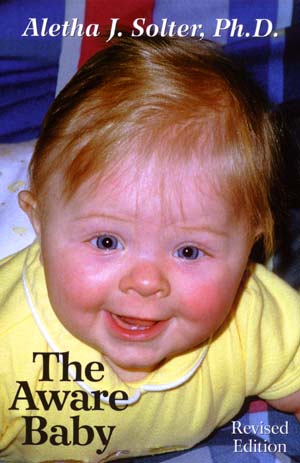
For more information about babies, attachment, and crying, see Aletha Solter's book, The Aware Baby.
Related articles: